
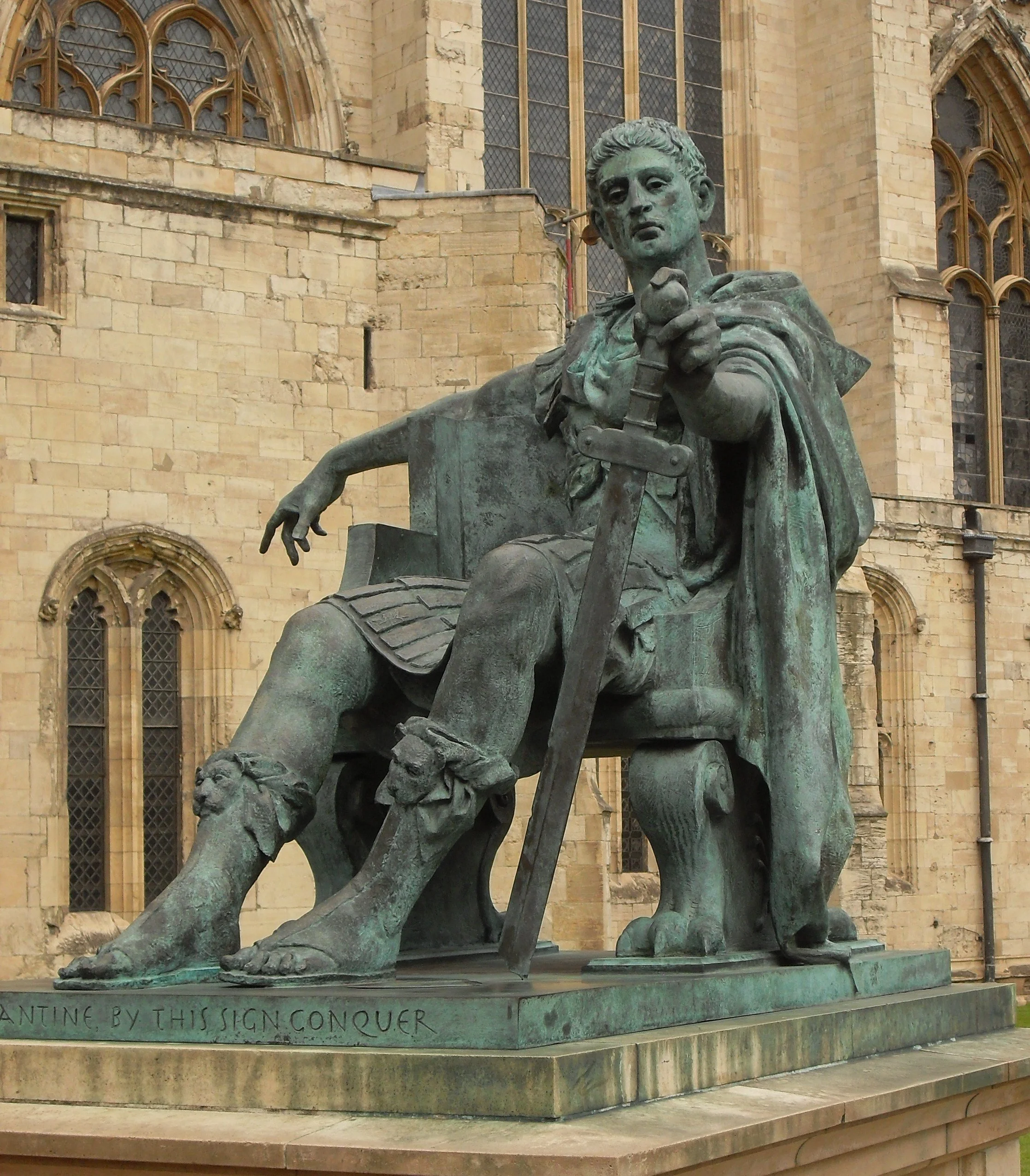
Philip Jackson, Constantine the Great, York, 1998
This image: Robert J. Wright, 2012
“Constantine the so-called Great”. That’s what my Latin teacher called him, many years ago. He was a young radical (the Latin teacher, that is), and appalled by the excesses of not only Constantine’s reign, but also of the subsequent Christian emperors’ reigns. He wasn’t entirely wrong. Constantine was a ruthless, brutal man. His championship of the formerly-persecuted Christian faith has burnished his reputation in later Western culture (albeit not for all Latin masters). But his treatment of his own family tells another story.
We will follow the career of this soldier-emperor from the moment his father’s troops proclaimed him in York, to his reunification of the Eastern and Western Empires. But that’s not all. His championing of the Christian faith, however beneficial to his later reputation, appears to have been entirely genuine – from the Council of Nicea, through to his alleged deathbed conversion. Along the way, he founded a victory city full of Christian buildings and glorious symbolism. He called it Constantinople.
RJW F2609 Online (via Zoom)
3 weeks, Wednesday 18 March - Wednesday 1 April.
£45 (individual registration); £80 (for two people sharing one screen).